Treatments
Primary rhinoplasty
The first nose surgery. We aim to bring the nose into harmony with the patient's face, with a natural result and no obvious surgical traces.
Rhinoplasty team of Dr. Hernán Chinski and Dr. Luis Chinski
Goals of rhinoplasty
Our goals in plastic surgery of the nose are:
- Bring the nose into harmony with the patient's face.
- Aim for natural results.
- Maintain or improve breathing.
- Fulfil the patient's aesthetic wishes as far as is technically possible.
- Achieve a result with no obvious surgical traces: one that doesn't look operated on.
- Advise the patient on the changes worth making, from the surgeon's point of view.
Making the nose look natural and in harmony with the face requires greater technical sophistication.
One of the most complex surgeries
It is recognised worldwide that cosmetic nose surgery is one of the most complex procedures. That's why it must be performed by a specialist in nasal aesthetics and function.
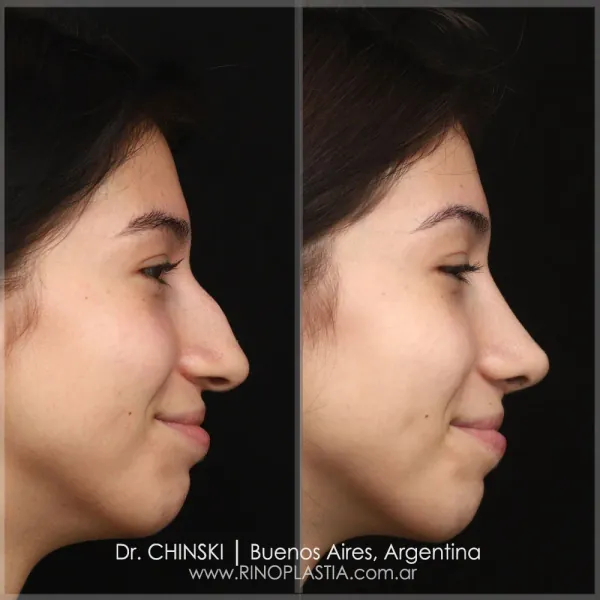
For example, when we file down a hump on the nasal dorsum, we make sure it doesn't drop excessively but stays straight, with a harmonious relationship between the dorsum and the tip. When we treat a bulbous tip, we make sure it doesn't collapse or look pinched afterwards.
Open or closed rhinoplasty
In the closed technique, the incisions are made inside the nostrils and are invisible. The open technique adds a small incision on the columella, which leaves an almost invisible scar. We choose the open approach in the vast majority of cases, because it lets us better reproduce the result we are aiming for.
What the surgery involves
The procedure takes 2 hours on average. Only a very short part of that time is spent removing tissue or making the nose smaller. If only that part were done, the nose would look artificial, with obvious signs of surgery. We spend the rest of the time making it look natural.
Anaesthesia and hospital
We prefer general anaesthesia, with the patient fully asleep. The surgery is performed in the operating room of a high-complexity hospital, never in a private office, and it is outpatient surgery: patients are discharged about 3 hours later.
The current paradigm is to always think of the nose from both perspectives: it should look beautiful and allow proper breathing.
Recovery
The recovery is not usually painful. Most patients don't take painkillers; the usual symptoms are mild discomfort and a feeling of nasal congestion.
- After 48 hours: light activities at home.
- Between 5 and 10 days: activities outside the home.
- Between days 9 and 12: check-up and splint removal.
- Between 3 weeks and a month: intense physical activity.
- Between 30 and 45 days: direct sun exposure, always with sunscreen.
At 2 months about 70% of the result can be seen. The nose keeps losing swelling, minimally, throughout the first year.
Risks
As with any surgery, there is a risk of complications. In a healthy patient, with controlled and planned general anaesthesia, that risk is minimal.
Complications are rare: bleeding requiring some kind of intervention (less than 0.5%), healing problems and infection (less than 1%). As for the result, worldwide statistics report that around 5% of primary rhinoplasties need a further operation.
Frequently asked questions
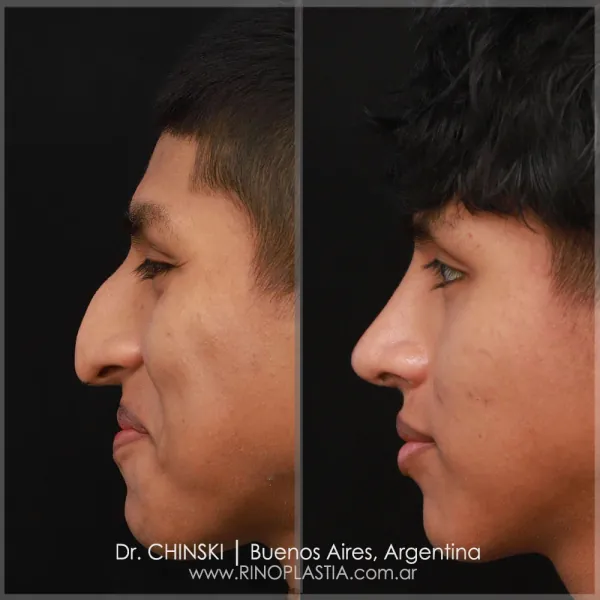
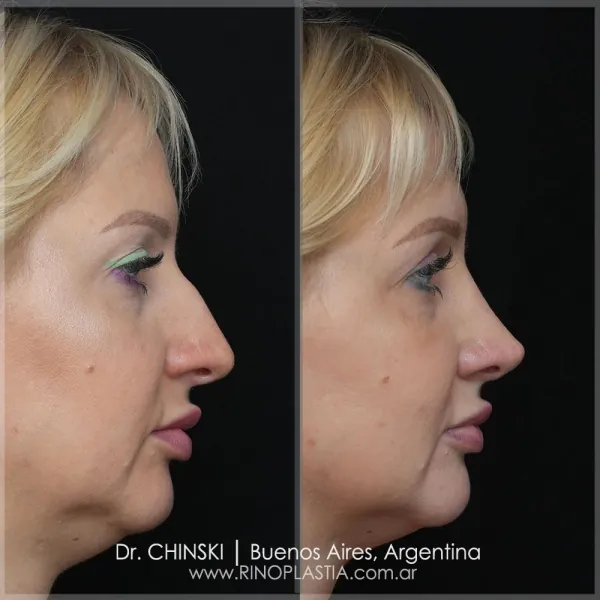
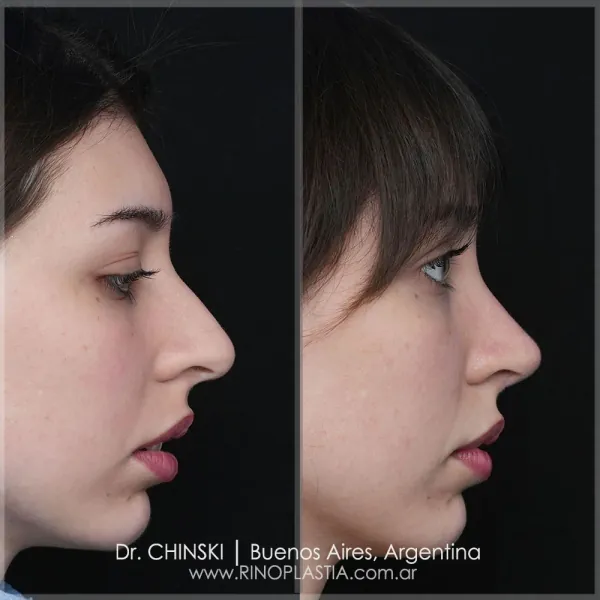
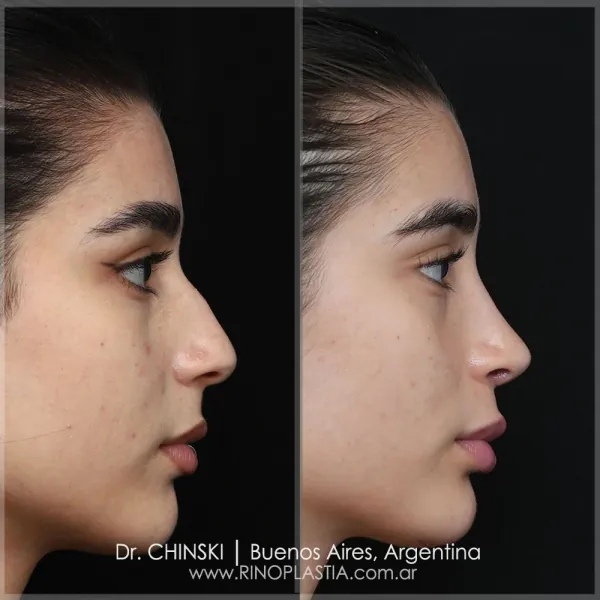
Before and after
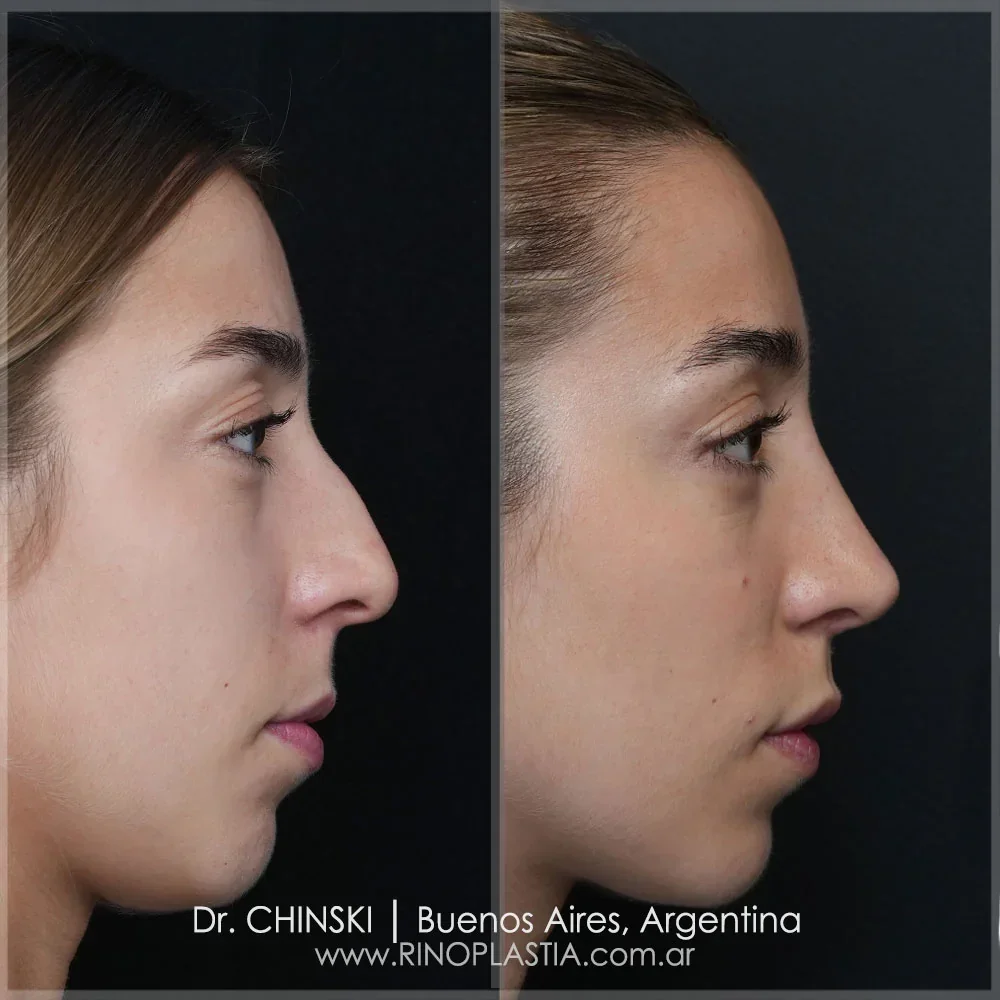
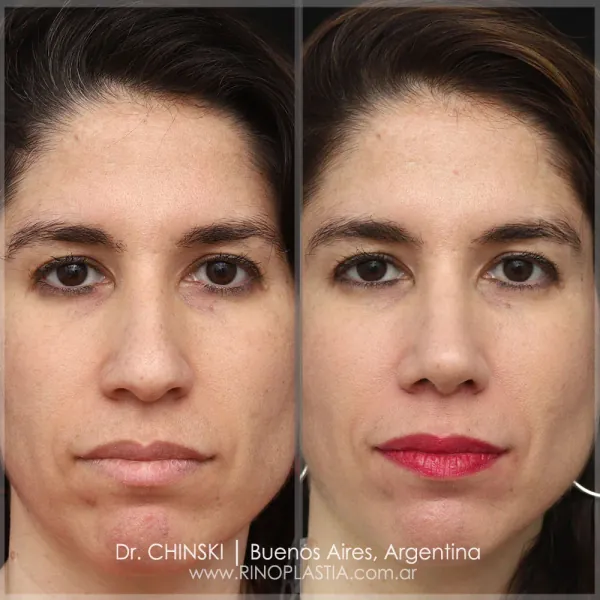
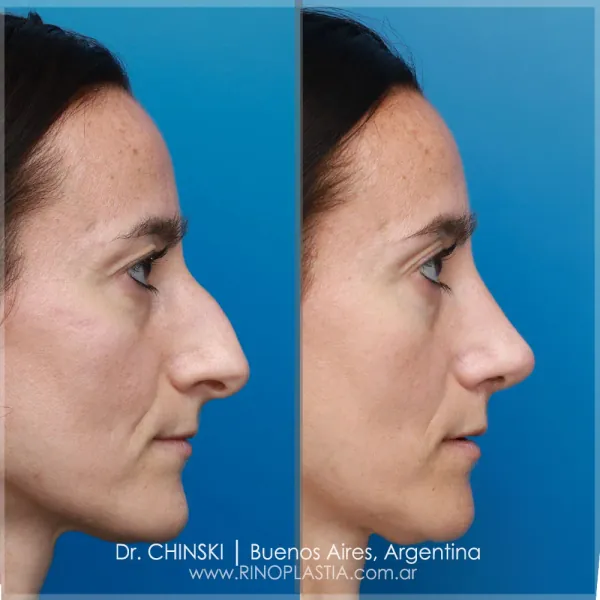
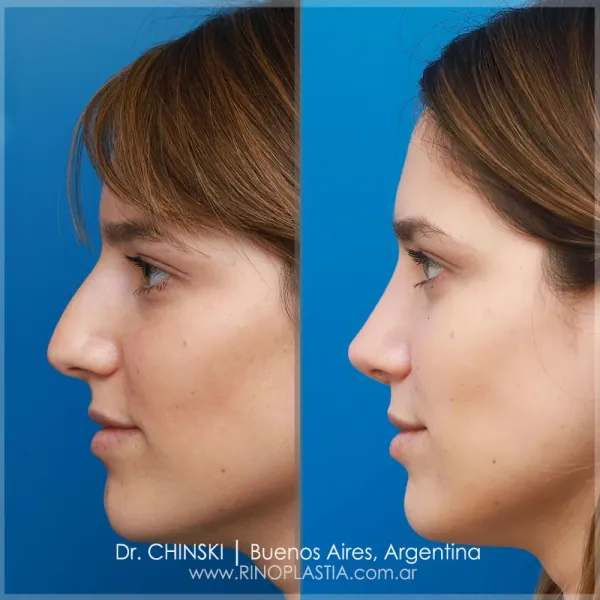
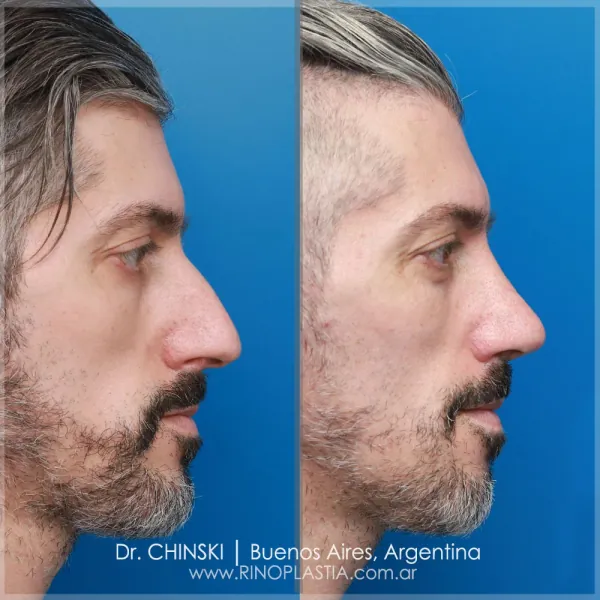
Rhinoplasty: dorsal hump and thin skin – Case 1
Primary rhinoplasty · Dorsal hump · Thin skin
1 year after
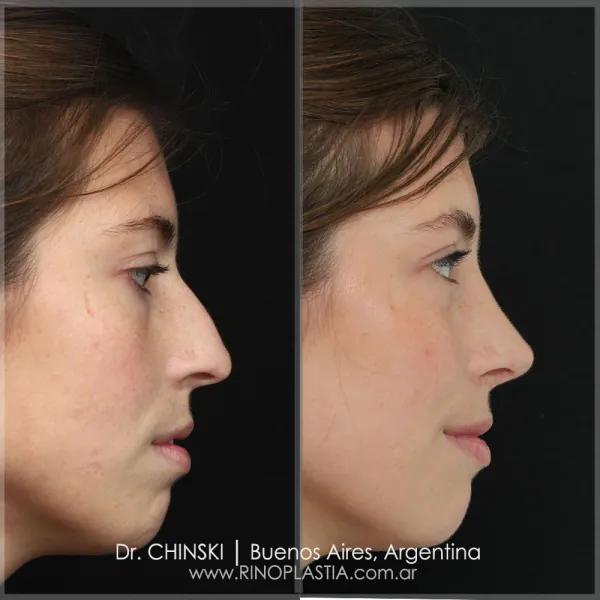
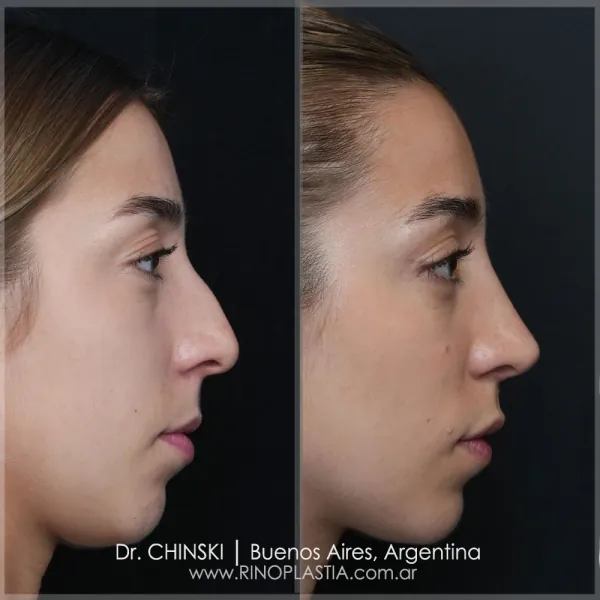
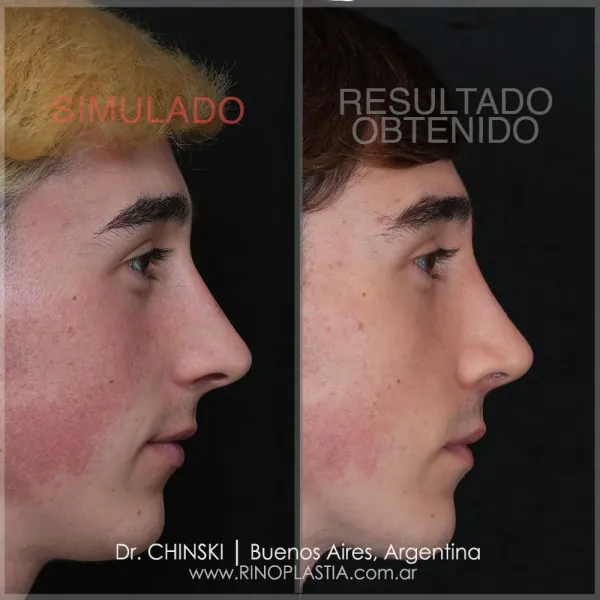
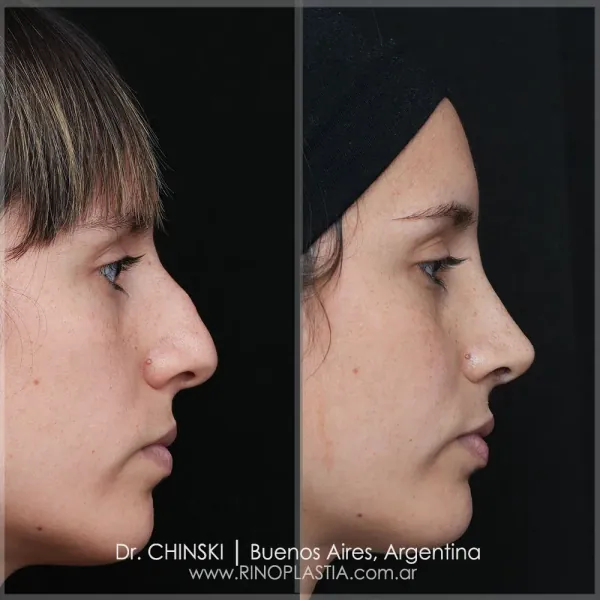
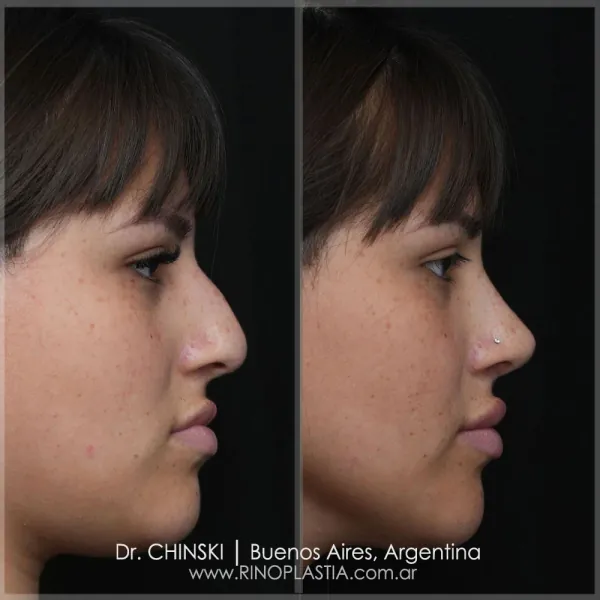
Rhinoplasty: dorsal hump and deviated nose – Case 2
Primary rhinoplasty · Dorsal hump · Deviated nose
4 months after
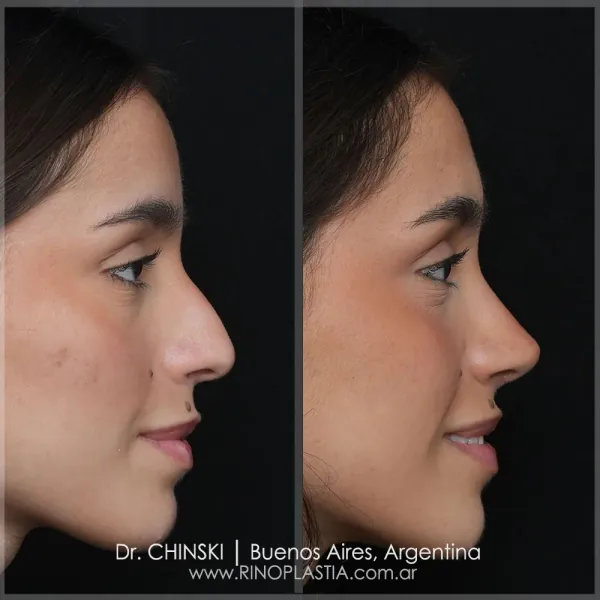
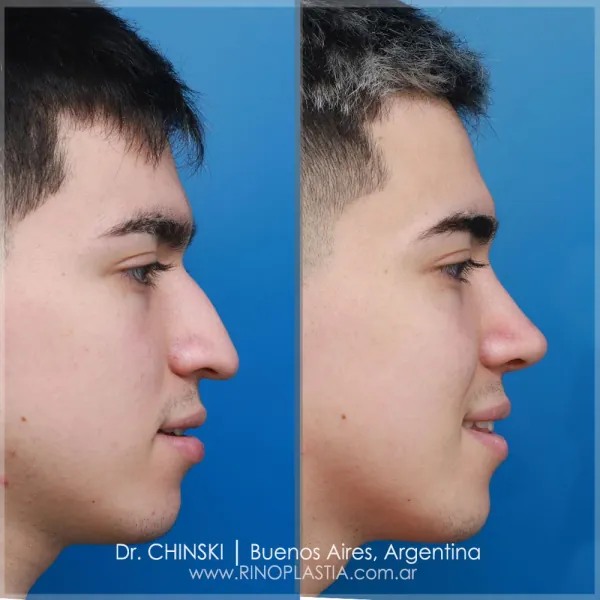
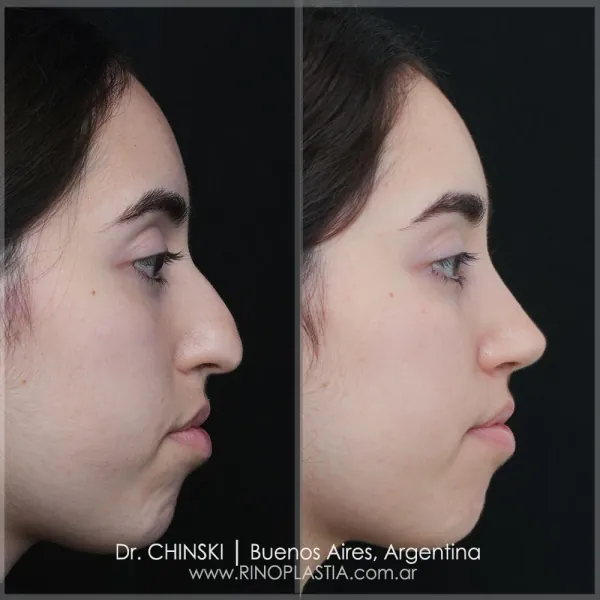
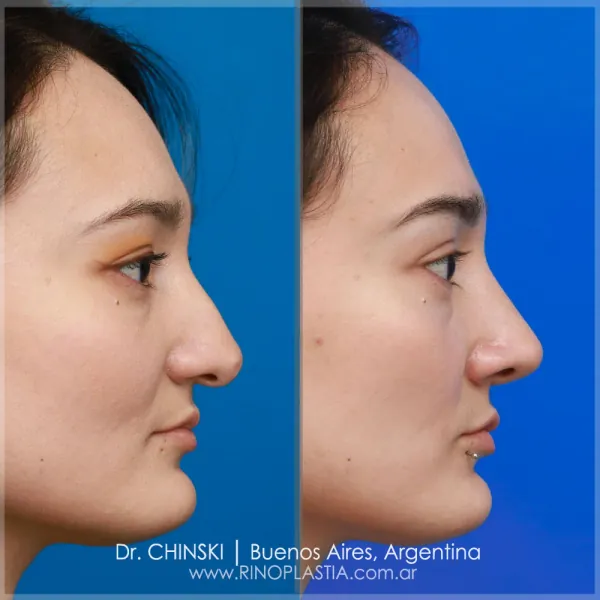
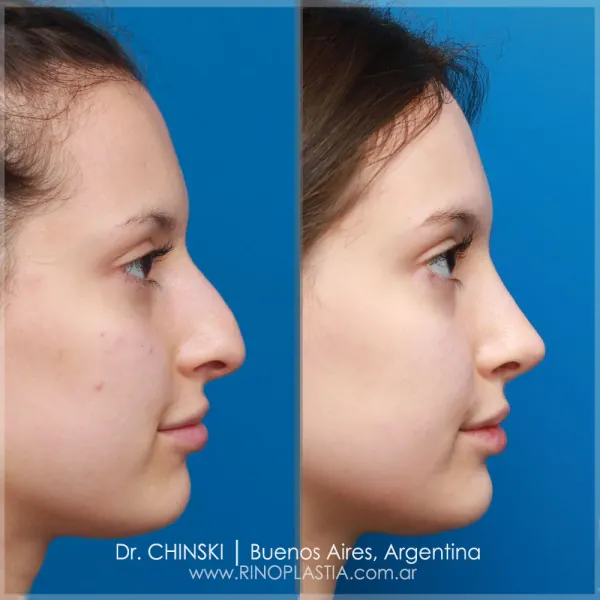
Rhinoplasty: dorsal hump and thin skin – Case 3
Primary rhinoplasty · Dorsal hump · Thin skin
8 months after
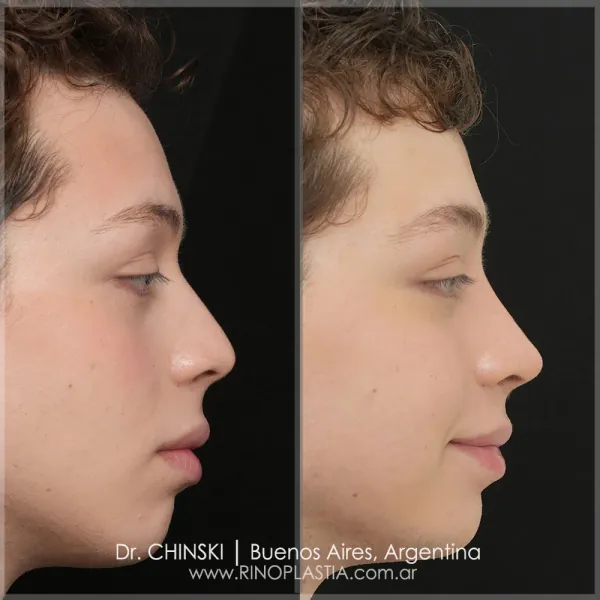
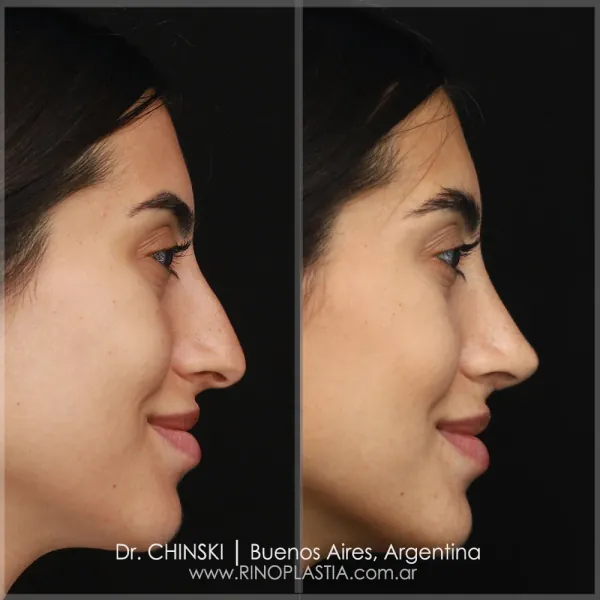
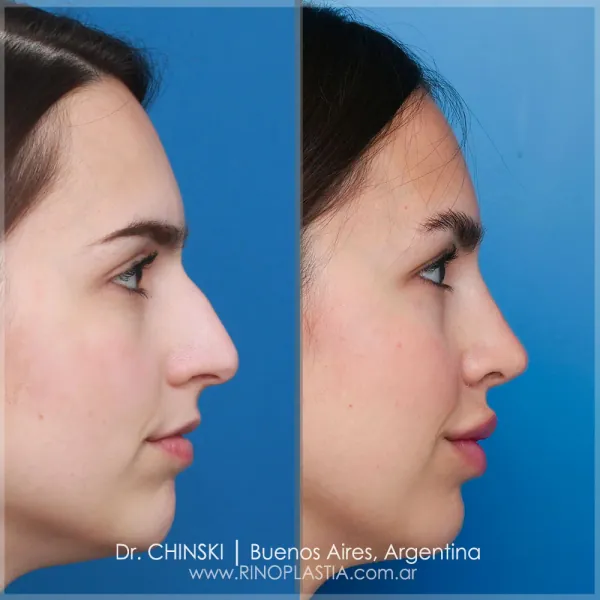
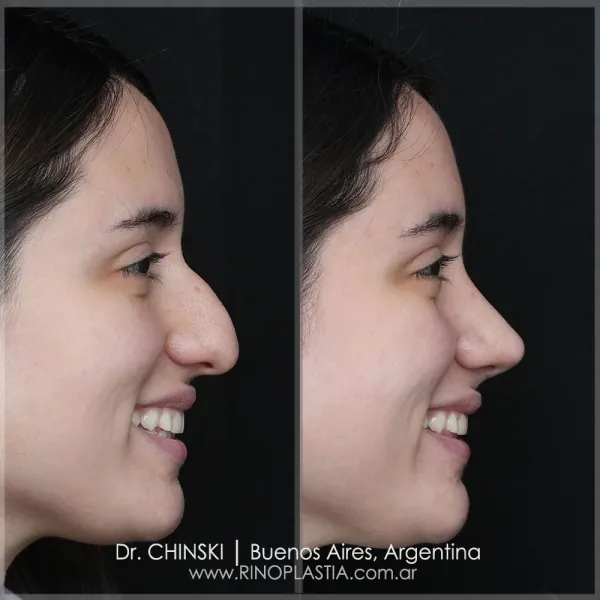
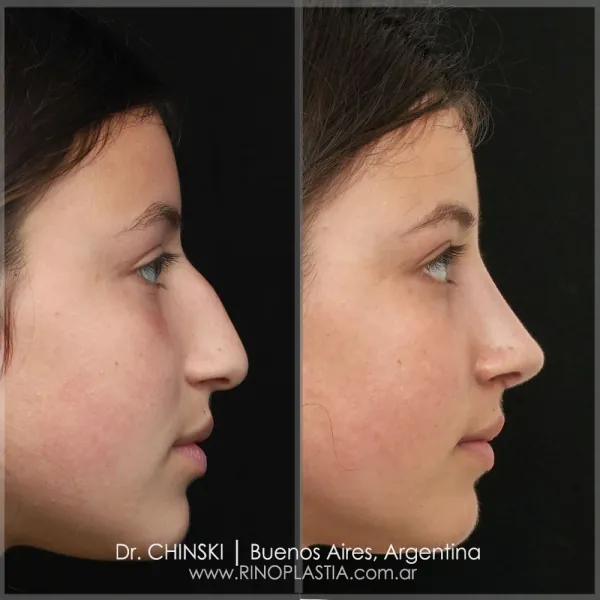
Rhinoplasty: dorsal hump, droopy tip and thick skin – Case 5
Primary rhinoplasty · Dorsal hump · Droopy tip
2 months after
Rhinoplasty: dorsal hump and thin skin – Case 7
Primary rhinoplasty · Dorsal hump · Thin skin
1 year after
Rhinoplasty: dorsal hump, over-projected nose, droopy tip and undefined tip – Case 8
Primary rhinoplasty · Dorsal hump · Over-projected nose
4 months after
Rhinoplasty: dorsal hump, droopy tip and wide or irregular dorsum – Case 9
Primary rhinoplasty · Dorsal hump · Droopy tip
4 months after
Rhinoplasty: dorsal hump, over-projected nose, droopy tip, deviated nose, hanging columella and thick skin – Case 10
Primary rhinoplasty · Dorsal hump · Over-projected nose
2 months after
Rhinoplasty: dorsal hump and droopy tip – Case 11
Primary rhinoplasty · Dorsal hump · Droopy tip
Rhinoplasty: dorsal hump and thin skin – Case 12
Primary rhinoplasty · Dorsal hump · Thin skin
2 months after
Rhinoplasty: dorsal hump, wide or irregular dorsum and deviated nose – Case 13
Primary rhinoplasty · Dorsal hump · Wide or irregular dorsum
2 years after
Rhinoplasty: dorsal hump, over-projected nose, wide or irregular dorsum and thin skin – Case 15
Primary rhinoplasty · Dorsal hump · Over-projected nose
8 months after
Rhinoplasty: dorsal hump – Case 16
Primary rhinoplasty · Dorsal hump
Rhinoplasty: dorsal hump, over-projected nose, droopy tip, hanging columella and thick skin – Case 17
Primary rhinoplasty · Dorsal hump · Over-projected nose
4 months after
Rhinoplasty: dorsal hump and thick skin – Case 18
Primary rhinoplasty · Dorsal hump · Thick skin
Rhinoplasty: dorsal hump, droopy tip, deviated nose, thin skin and alar base surgery – Case 20
Primary rhinoplasty · Alar base surgery · Dorsal hump
2 months after
Rhinoplasty: dorsal hump – Case 21
Primary rhinoplasty · Dorsal hump
2 months after
Rhinoplasty: dorsal hump, droopy tip, bulbous tip, wide or irregular dorsum and thin skin – Case 22
Primary rhinoplasty · Dorsal hump · Droopy tip
1 year after
Rhinoplasty: dorsal hump and wide or irregular dorsum – Case 23
Primary rhinoplasty · Dorsal hump · Wide or irregular dorsum
Rhinoplasty: droopy tip, undefined tip, deviated nose and thick skin – Case 24
Primary rhinoplasty · Droopy tip · Undefined tip
4 months after
Rhinoplasty: dorsal hump and droopy tip – Case 25
Primary rhinoplasty · Dorsal hump · Droopy tip
2 months after
Rhinoplasty: dorsal hump – Case 26
Primary rhinoplasty · Dorsal hump
2 months after
Rhinoplasty: dorsal hump and deviated nose – Case 27
Primary rhinoplasty · Dorsal hump · Deviated nose
Rhinoplasty: dorsal hump, over-projected nose, wide or irregular dorsum, deviated nose, hanging columella and thin skin – Case 28
Primary rhinoplasty · Dorsal hump · Over-projected nose
2 months after
Ask about your case
Message us on WhatsApp or book an in-person or video call appointment.